
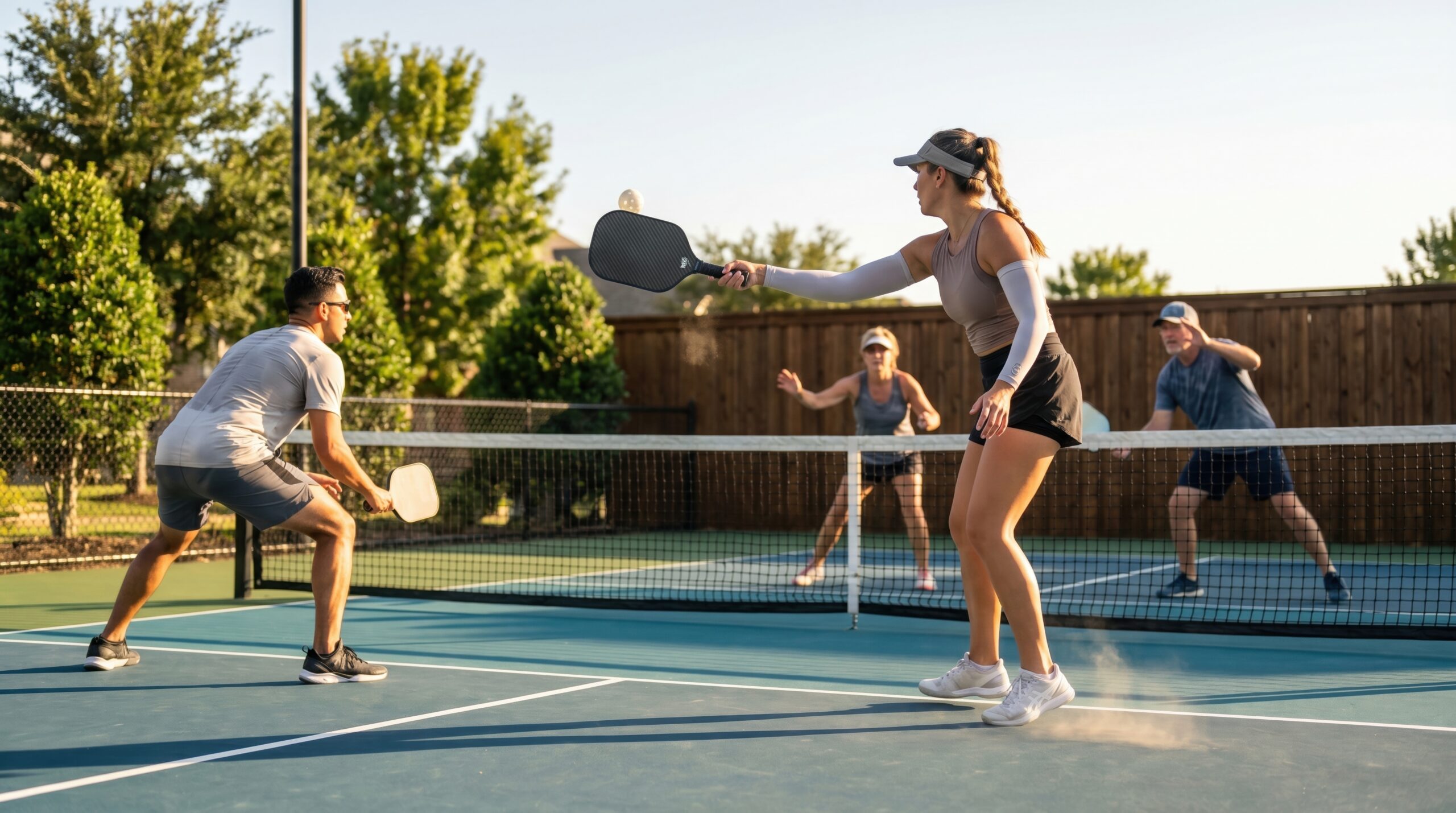
Pickleball Injuries Are Rising: Common Injuries and How to Prevent Them
Expertly reviewed by David Mandil, MD, Primary Care Sports Medicine
Quick Answer
Pickleball injuries often result from falls, sudden movements, or repeated strain on muscles and tendons. Common injuries include wrist fractures, ankle sprains, Achilles tendon injuries, and pickleball elbow (also known as lateral epicondylitis or tennis elbow). Warming up, wearing supportive court shoes, gradually increasing playing time, and avoiding risky backward movements can help reduce the chance of injury.
Pickleball is easy to love. It’s social, it’s fun, and many people can learn the basics in an afternoon. It’s no surprise that neighborhood courts are busy and new clubs keep popping up. But the game can move faster than it looks. For example, one quick step back to reach a high shot can end with a fall onto your hand, and too many games in a row can leave your elbow or shoulder aching. As more people play, more people are getting hurt, and many of those injuries can be traced to a few common moves.
What You’ll Learn
- Why pickleball injuries are rising so fast
- Which pickleball injuries show up most often
- What pickleball elbow is
- How to lower your risk on the court
- When a pickleball injury is worth getting checked
Why Are Pickleball Injuries Rising So Fast?
Far more people are playing pickleball, it has grown about 6 times bigger in just 5 years. When millions of new players step onto the court, more injuries tend to follow.
A national study reported that pickleball injuries treated in emergency rooms increased approximately 88% between 2020 and 2022. This increase reflects more injuries requiring emergency care, not necessarily a higher risk for each individual player.
The game itself doesn’t seem to be getting rougher. More likely, it’s who is playing and how often. Many players are brand new to the sport, some haven’t played anything fast-paced in years, and others play several days a week once they’re hooked. More time on the court can also mean more chances for a fall or an overuse injury.
What Are the Most Common Pickleball Injuries?
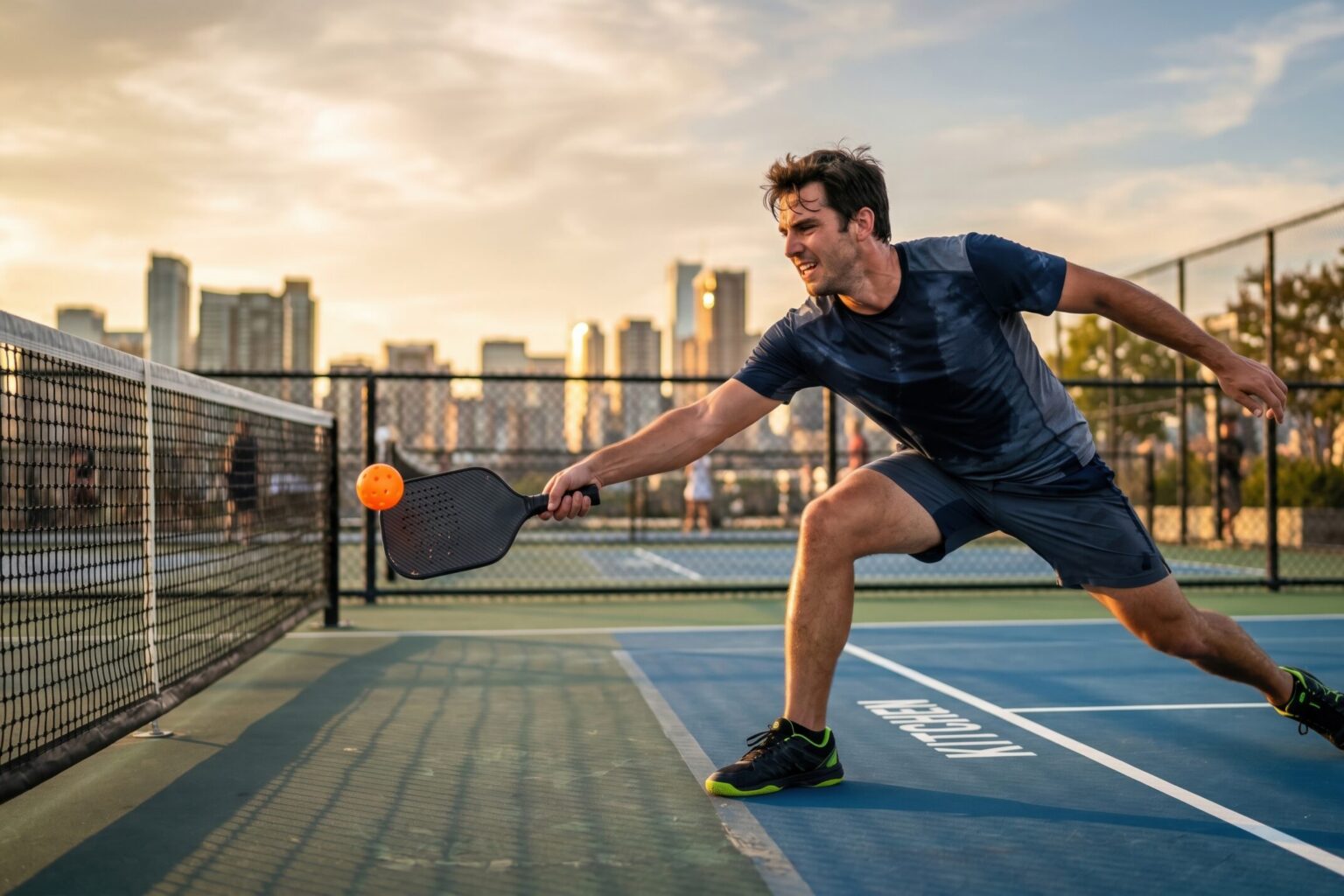
Pickleball injuries generally fall into two categories: sudden injuries and overuse injuries. Sudden injuries often happen during falls or quick changes in direction, while overuse injuries develop gradually from repeated movement. Broken bones and sprains appear to be the most common, and the wrist is often where a break happens, since many people reach out a hand to catch themselves when they fall. Knowing how each type of injury starts can make it easier to spot early.
Two types of pickleball injuries:
- Sudden injuries happen in a split second, like twisting an ankle on a quick turn or landing hard on a hand after a fall.
- Overuse injuries build slowly over weeks or months from doing the same motion again and again. An elbow that aches after every game or a shoulder that gets sore from serving can be early signs.
Knowing the type of injury can help. A sudden injury is usually easy to trace back to one moment. An overuse injury can sneak up slowly, so many players keep playing through the pain longer than they should. Soreness that seems to come and go is a pattern worth paying attention to.
Pickleball injuries by body area
| Body area | Movement that can cause it | Possible injuries |
| Wrist and hand | Falling and catching yourself with an outstretched hand | Wrist fractures, sprains, finger injuries |
| Hip | Falling backward or sideways | Hip fractures, deep bruising |
| Achilles and calf | Pushing off suddenly from an upright stance | Achilles strains or tears, calf strains |
| Knee | Quick lunges and pivots near the net | Sprains, meniscus irritation, arthritis flare-ups |
| Elbow | Repeated gripping and swinging | Pickleball elbow (lateral epicondylitis) |
| Shoulder | Overhead smashes and serves | Rotator cuff strain or irritation |
| Ankle | Side-to-side shuffling on hard courts | Ankle sprains |
Why Do So Many Pickleball Injuries Come From Falls?
Falls appear to be one of the biggest causes of pickleball injuries, and the high shot overhead, called a lob, is a common setup. Stepping backward to chase it shifts weight onto the heels. That makes it harder to stay balanced, and one catch of the foot can lead to a backward fall.
When that happens, most people reach back with a hand to break the fall. That can put a lot of force through the wrist in a split second. A backward or sideways fall can also land on the hip.
Bone strength can play a role, too. The American Academy of Orthopaedic Surgeons notes that players with weaker bones, such as from osteoporosis, can face a higher risk of a fracture if they fall.
What Is Pickleball Elbow?
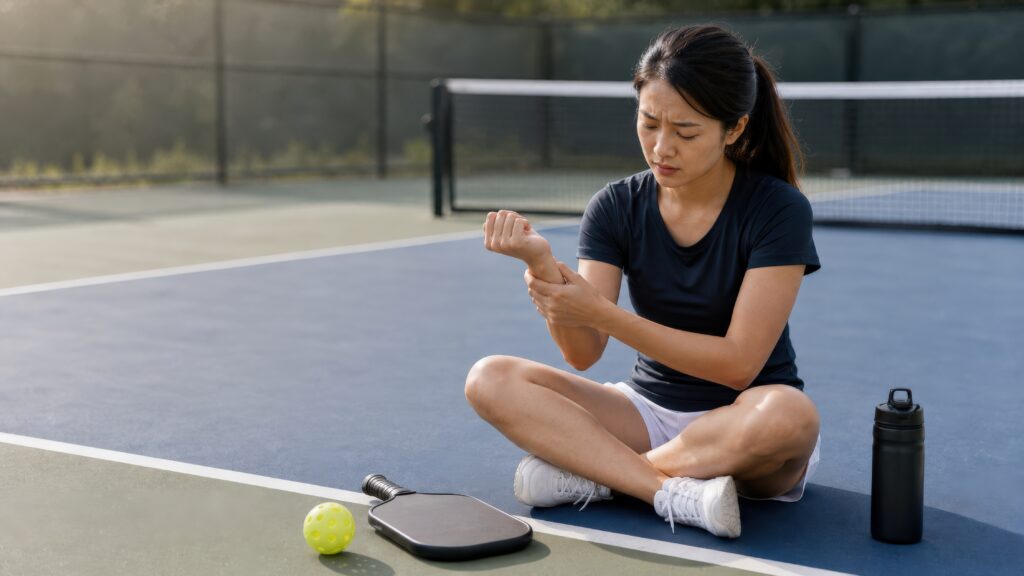
Pickleball elbow, also known as tennis elbow or lateral epicondylitis, is an overuse condition affecting the tendons on the outside of the elbow. Repeated gripping and swinging can place stress on these tendons, leading to pain and tenderness that may worsen during everyday activities.
Many players first notice a mild ache on the outside of the elbow after a game. Over a few weeks, that can turn into a burning or sharper pain, and grip strength can start to feel weaker. Everyday tasks like turning a doorknob, lifting a coffee mug, or shaking hands can make it hurt more.
Equipment and technique can play a part. Additionally, a paddle grip that’s too big or too small, or a swing that relies too much on the wrist, can add extra strain.
Why Is the Achilles Tendon at Risk?
The Achilles tendon connects the calf muscles to the heel bone. It does a lot of work during quick starts and stops, which pickleball has plenty of. Cedars-Sinai has reported a rise in pickleball-related Achilles tendon injuries, and stance appears to be a big part of the reason.
Sudden starts, stops, and changes in direction place considerable force on the Achilles tendon. Players returning after a long break or increasing their playing time too quickly may be more vulnerable to tendon injuries. Proper conditioning, gradual increases in activity, and time for recovery can help manage this strain.
Achilles injuries can range from mild soreness to a partial or full tear. Sudden pain in the back of the ankle or calf, a popping feeling, or trouble pushing off the ground can be signs that something is wrong.
How Can You Lower Your Risk on the Court?
A few simple habits can help.
Ways to lower your pickleball injury risk
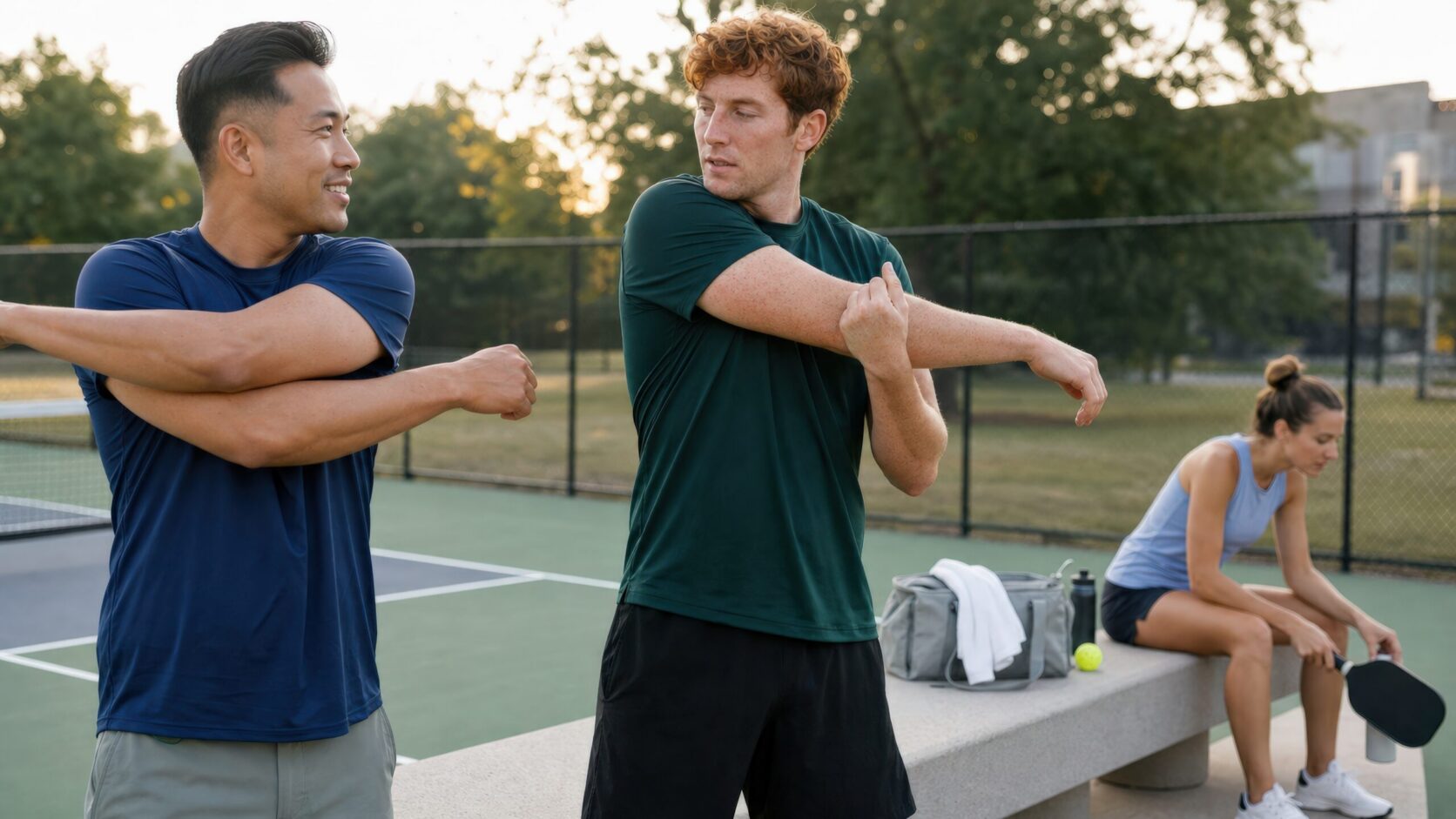
- Warm up first. Light movement and easy hitting before a game can help prepare muscles and joints. A good warm-up focuses on mobility, not just flexibility, so joints are ready for quick moves.
- Wear court shoes. Shoes made for pickleball or tennis can give the side-to-side support and grip the game calls for.
- Stay hydrated. Dehydration can contribute to weakness and slower reaction times.
- Increase playing time gradually. If you’re new to pickleball or returning after a break, start with shorter sessions and build up as your body adjusts. Take rest breaks and pay attention to recurring discomfort.
- Build strength and balance. Exercises that support leg strength, stability, and coordination can help prepare the body for pickleball’s quick movements and changes in direction.
- Let some lobs go. Backpedaling for a deep shot is a common setup for a fall, so letting a partner take it, or letting it fly, can be the safer call.
- Work on balance. Good balance can help the body recover from a quick misstep. Something as simple as standing on one leg can show how steady the body is.
- Take a lesson. Good technique can help protect the elbow and shoulder from overuse.
When Should You See a Doctor for a Pickleball Injury?
Mild muscle soreness can happen after physical activity, particularly when trying a new sport. However, persistent pain, noticeable swelling, difficulty bearing weight, or reduced joint movement may indicate an injury that needs medical attention. Sudden severe pain, a popping sensation near the Achilles tendon, or difficulty walking after an injury should be evaluated promptly.
Signs worth getting checked
- Wrist or hand pain, swelling, or bruising after a fall
- Trouble gripping your paddle or everyday items
- Elbow or shoulder pain that lasts more than a few days
- A pop or sudden pain in the back of the ankle or calf
- Knee swelling, locking, or giving way
- Pain that keeps you off the court or up at night
An evaluation can help find the source of the pain and whether rest, physical therapy, or another approach makes sense. Sports medicine providers and orthopedic providers focus on activity-related injuries, as well as evaluate bone, joint, and tendon injuries. Getting the right answer early can make it easier to plan a safe return to the court.
Key Takeaways
- Pickleball injuries commonly involve falls, sudden movements, and repetitive strain.
- Wrist fractures, ankle sprains, Achilles tendon injuries, and pickleball elbow are important injuries for players to recognize.
- Gradually increasing playing time, warming up, and wearing appropriate court shoes can help lower injury risk.
- Persistent pain, swelling, or difficulty moving after an injury may warrant medical evaluation.
- Avoiding risky backward movements and taking rest breaks may also help reduce injury risk.
Frequently Asked Questions About Pickleball Injuries
Sprains and fractures are among the injuries frequently reported in studies of pickleball-related emergency department visits. Wrist fractures can occur when players fall onto an outstretched hand, while quick changes in direction can lead to ankle sprains, or injuries to the achilles tendon. The most common injury may differ depending on the players and types of injuries studied.
Not necessarily. Both sports involve quick movements, repetitive swinging, and the possibility of falls. Although pickleball-related emergency department visits have increased, that does not establish that pickleball has a higher injury rate than tennis. A meaningful comparison would need to account for player age, experience, and time spent playing.
Yes. New players, people returning to fast-paced sports after a long break, and people who play long sessions without rest can face a higher risk.
Yes. The wrist appears to be one of the most common places to break a bone in pickleball. It often happens when a player falls and lands on an outstretched hand.
It could be pickleball elbow, the same condition as tennis elbow, (also known as lateral epicondylitis). It happens when gripping and swinging over and over irritate the tendons on the outside of the elbow. Pain that lasts or makes it hard to grip is worth getting checked.
It depends on the injury. A mild sprain can heal much sooner than a broken bone or a torn tendon. How serious the injury is, which part of the body is hurt, and overall health can all affect recovery. A provider can explain what to expect, and this guide to how long different injuries take to heal goes into more detail.
Hurt on the Pickleball Court?
A fall, a sore elbow, or a calf that won’t settle down can keep you off the court longer than you’d like. If pain lingers, gets worse, or affects your game or daily routine, an evaluation can help sort out what’s going on.
PainandInjury.com helps patients find sports medicine physicians, orthopedic specialists, and other healthcare providers across New York, New Jersey, and Connecticut. Call 800-949-6100 or contact us to learn more about available doctors and appointment options.
This article is for educational purposes only. It is not a diagnosis, an individual treatment plan, or a replacement for an evaluation by a qualified healthcare professional. If you have a medical emergency, call 911.