

Feet on the Dashboard in a Car Accident: What Injuries Can Happen?

Quick Answer
Riding with your feet on the dashboard can raise the risk of serious injuries in a crash. Possible injuries can include hip dislocations, knee ligament tears, and fractures in the leg, ankle, or foot. If the passenger air bag goes off, it can push the knees toward the face and chest.
Putting your feet up on the dashboard might seem like a comfortable way to relax during a long drive. It’s a habit many passengers don’t think twice about, especially when they’re trying to stretch out. But what happens if the car suddenly stops or gets into an accident? That seemingly harmless position can change how your body absorbs the impact, putting more than just your legs at risk.
In This Article
- Why having your feet on the dashboard changes how a crash affects your body
- What injuries can happen to the hip and pelvis
- How a crash can injure your knee, thigh, and lower leg
- What foot or ankle pain can mean after this kind of crash
- How the air bag can push your knees toward your face
- When to get checked after a crash with your feet up
- How passengers can sit to stay safer
Why Does Having Your Feet on the Dashboard Change a Crash?
Car safety systems are built for a passenger who sits upright with both feet on the floor. When your feet are on the dash, your hips and knees bend sharply, and your legs sit right where the passenger air bag opens.
In a crash, the car stops fast but your body keeps moving. With your feet up, that force can push a foot backward, drive a knee into the dashboard, or travel up the thigh to the hip. The National Highway Traffic Safety Administration advises keeping at least 10 inches between the center of your breastbone and the air bag cover. It also notes that air bags work with seat belts, not in place of them. Putting your feet on the dash moves your body out of the seating position these safety systems are designed around.
The injuries that result from a crash depend on several factors, including the speed and direction of the impact, seat belt use, and air bag deployment. These factors can also affect the severity of car accident injuries.
What Injuries Can Happen to the Hip or Pelvis?
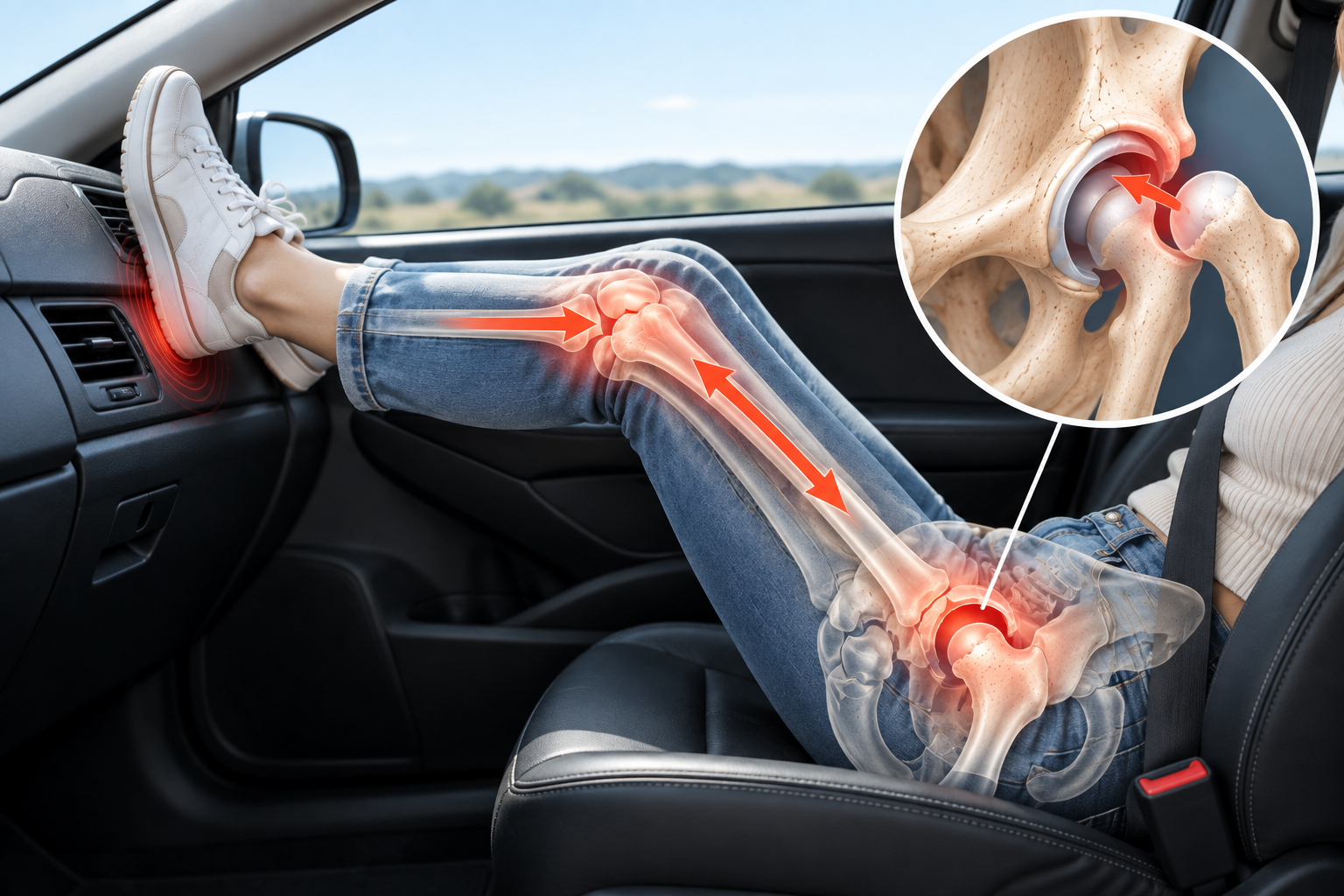
Riding with your feet on the dashboard can put the hip and pelvis at risk for dislocations, fractures, and soft-tissue injuries. One potentially serious injury is a hip dislocation, where the ball at the top of the thighbone is forced out of the hip socket.
According to the American Academy of Orthopaedic Surgeons (AAOS), car crashes are the most common cause of hip dislocations. They often happen when the knee hits the dashboard and drives the thigh backward. Doctors sometimes call this a “dashboard dislocation.” With your feet up, your hips and knees are already bent, which can make the hip easier to push out of place. Fractures of the hip socket, pelvis, or thighbone can happen along with it.
A dislocated hip usually causes severe pain and makes the leg hard to move. Still, not every sore hip after a crash means a dislocation or fracture. Bruising, muscle strains, and joint irritation can also cause hip pain, and these can feel worse a day or two later as swelling builds.
How Can the Knee, Thigh, and Lower Leg Be Affected?
When your feet are on the dashboard, a crash can drive the bent knee into the dash or send force through the whole leg. That can injure the kneecap, cartilage, meniscus, or ligaments, and strong pressure or twisting can also fracture the thighbone or shinbone.
The ligament most linked to this kind of crash is the posterior cruciate ligament (PCL), which keeps the shinbone from sliding backward. The AAOS lists a bent knee hitting the dashboard as a common cause of PCL tears. Still, knee pain does not always tell the whole story. Force can travel from the knee up the thigh, so the knee and hip can be hurt in the same crash. That’s why a provider usually checks the whole leg, not just the spot that hurts most.
What Can Foot or Ankle Pain Mean After This Kind of Crash?
Feet on the dash can be pushed into the windshield, dashboard, or roof in a crash, and the ankle can bend or twist past its normal range. Possible injuries include sprains, bruises, broken bones in the foot, ankle, or heel, and tendon or joint injuries. A foot can look normal and still be hurt, so pain, swelling, or trouble walking that grows over the next few days is a reason to have it looked at.

Can the Air Bag Push Your Knees Into Your Face?
Yes, it can. The passenger air bag opens from the dashboard in a fraction of a second. When your feet are up, it can push your legs upward and drive your knees or feet toward your face and chest. This can lead to facial or eye socket fractures, a broken nose, head injuries, or neck and chest strain. Air bags protect best when you sit upright, because they’re designed to meet your upper body, not your legs.
When Should You Get Checked After a Crash With Your Feet Up?
If you have pain, swelling, or trouble moving after a crash, getting evaluated can help find the source. That’s true even if symptoms show up a day or two later, or if the pain is in a different spot than where you were hit.
Symptoms to Discuss With a Provider
- Hip, knee, ankle, or foot pain that lingers or gets worse
- Swelling or bruising that keeps spreading
- A knee that gives out, locks, or won’t fully straighten
- Trouble walking, standing, or climbing stairs
- Numbness, tingling, or weakness in the leg or foot
- Lower back pain that started after the crash
- Pain that gets in the way of sleep, work, or daily routines
Different specialists look at different parts of the problem. An orthopedic provider can evaluate bone, joint, and ligament injuries in the hip and knee. Physical medicine and rehabilitation providers and physical therapists focus on movement, strength, and supporting patients with everyday activities. Pain management providers can help when pain keeps interfering with your life.
How Should Passengers Sit to Stay Safer?
Air bags and seat belts work best when you’re sitting the way the car was designed. Before you settle in for a long drive, take a few seconds to check your position.
Tips to Sit Safely in a Car to Reduce Injury Risk
- Both feet rest on the floor, not the dash.
- The lap belt sits low across your hips, below your stomach.
- The shoulder belt crosses the middle of your chest and collarbone, away from your neck.
- Your seat back stays mostly upright, even on long trips.
- There’s at least 10 inches between your breastbone and the dashboard.
Crashes can still cause injuries when you do everything right. However, sitting this way gives your car’s safety systems the best chance to do their job.

Key Takeaways
- Feet on the dashboard put your legs in the air bag’s path and change how crash force moves through your body.
- A knee hitting the dash can tear the PCL and dislocate the hip in the same crash.
- The air bag can drive the knees toward the face.
- Sitting upright with both feet down and the belt low on your hips lets safety systems work as designed.
Frequently Asked Questions About Feet on the Dashboard Injuries
Your legs sit in the path of the passenger air bag and the hard parts of the dashboard. In a crash, force can drive the knees into the dash, push the hip out of its socket, break bones in the legs and feet, and launch the knees toward the face. The exact injuries depend on crash speed, direction, and seat belt use.
A dashboard injury happens when a bent knee strikes the dashboard in a crash. The force pushes the shinbone backward, which can tear the posterior cruciate ligament (PCL). It can also travel up the thigh, which can dislocate or fracture the hip. Riding with your feet on the dashboard increases your risk of injury because this position forces your knees and hips into sharp bends.
Some injury symptoms become more noticeable hours or days after a collision as swelling, stiffness, or soft-tissue irritation develops. Timing does not show how serious an injury is. Seek medical evaluation if you experience new swelling, spreading pain, numbness, weakness, or increasing difficulty walking.
No. Even one foot on the dash puts that leg in the air bag’s path and bends the hip and knee into a riskier position. A safer position is sitting upright with both feet on the floor and the seat belt worn correctly.
Hurt Your Hip, Knee, or Foot in a Crash With Your Feet Up?
Injuries from riding with your feet on the dashboard can involve more than one part of the body. PainandInjury.com can connect you with orthopedic, rehabilitation, and pain management care across New York, New Jersey, and Connecticut through our network. Call 800-949-6100 or request an appointment today.
This article is for educational purposes only. It is not a diagnosis, an individual treatment plan, or a replacement for an evaluation by a qualified healthcare professional. If you have a medical emergency, call 911.