

Soreness After the NYC Marathon: Normal or an Injury?

Quick Answer
Common post-marathon soreness can include a dull, general ache in the legs. It usually peaks a day or two after the race and then fades a little each day. Pain that feels sharp, stays in one spot, or gets worse can point to an injury. Soreness that lasts longer than a week is a reason to get checked.
The finish line feels amazing, and thousands of runners get to feel it every November. In fact, more than 59,000 runners finished the 2025 NYC Marathon, the largest marathon ever held. The next morning, however, can feel very different. For many runners, getting out of bed is slow, and walking down the subway stairs can feel almost impossible. That stiffness is often just the body recovering from 26.2 miles. Still, a marathon can also bring out an injury that looks a lot like normal soreness after a marathon. Knowing the difference can help runners decide when to rest and when to get checked.
What You’ll Learn
- What happens to the body after a marathon
- How long soreness after a marathon typically lasts
- Why the quads often hurt the most after the NYC Marathon
- How to tell muscle soreness from an injury
- Which injuries can show up after a marathon
- When pain after a marathon should be evaluated
What Happens to Your Body After a Marathon?
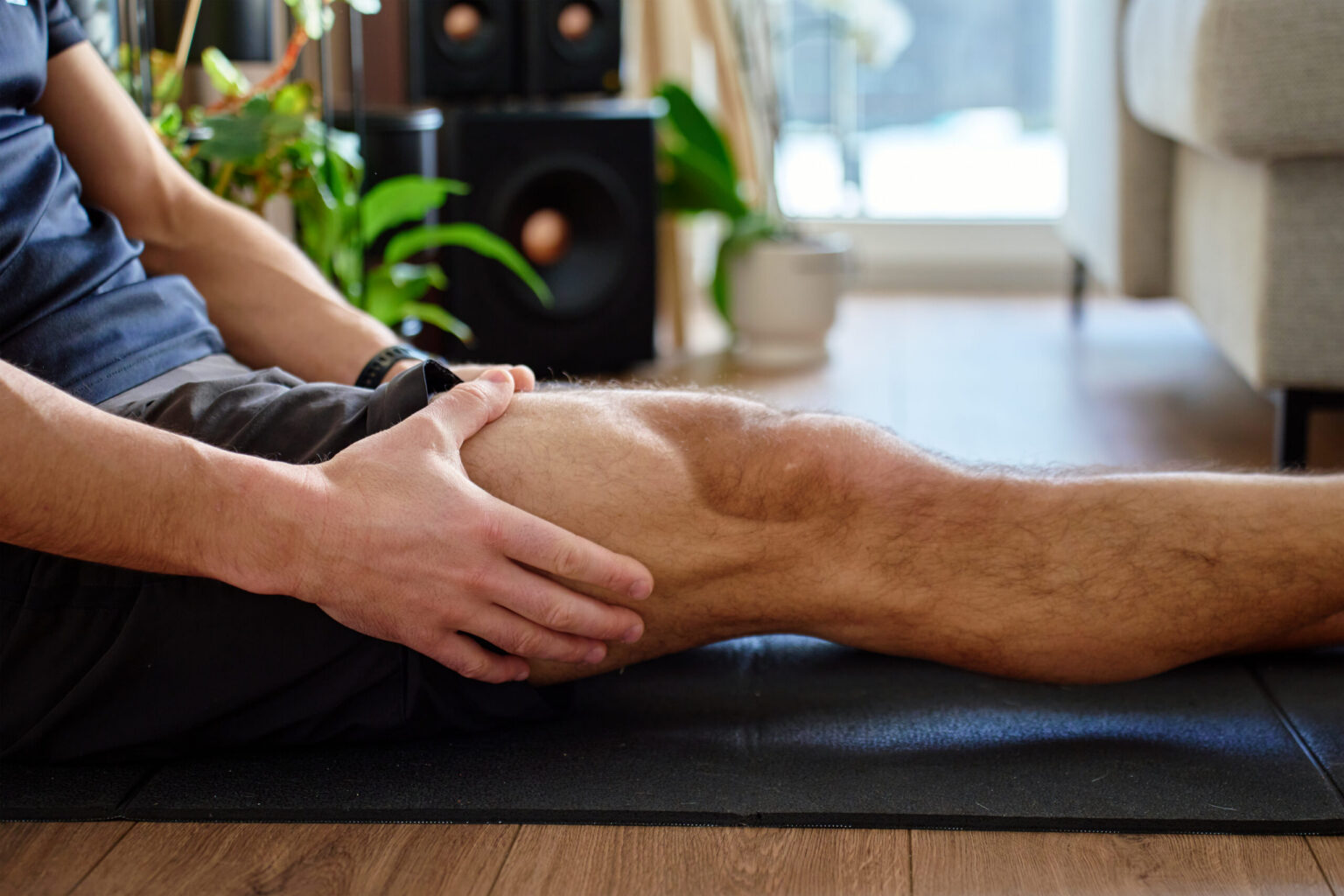
Running 26.2 miles puts the legs through tens of thousands of landings. As a result, the muscles develop tiny amounts of damage. The body begins repairing that damage as part of the recovery process. The ache that comes with this repair is called delayed onset muscle soreness, or DOMS.
DOMS is a common reason for soreness after a marathon. It can affect large muscles, such as the quads, hamstrings, and calves, while also making the legs feel stiff, weak, and tender to the touch.
How Long Are You Sore After a Marathon?
People are often sore 1-3 days after hard exercise. It rarely lasts more than five days. For many runners, soreness after a marathon peaks around the second day and then slowly eases.
The key word is gradual. Soreness that improves a little each day fits a normal recovery. On the other hand, pain that stays the same or gets worse calls for a closer look.
Marathon recovery timeline
| Time after the race | What’s typical | Signs to watch |
| Race day | Heavy, tired legs and stiffness | Sudden sharp pain, a “pop,” or trouble bearing weight |
| Days 1–2 | Peak soreness, especially in the quads | Pain in one spot or limping on one side |
| Days 3–5 | Soreness easing a little each day | Pain that stays the same or gets worse |
| Days 5–7 | Walking often feels more comfortable | A tender spot on a bone or pain at night |
| After 1 week | Many runners feel close to normal, though recovery varies | Any pain that lingers in one area |
Why Do Your Quads Hurt So Much After the NYC Marathon?
The front of the thigh often takes the biggest hit. That’s because the quads work as brakes when running downhill. This braking action, called eccentric loading, tends to cause more muscle damage than running on flat ground.
The NYC course has plenty of it. Runners cross five bridges, starting with the Verrazzano-Narrows Bridge on Staten Island. Every climb also comes with a descent. As a result, the quads can feel especially sore for a few days.
The good news is that this kind of soreness tends to pass. In one study, quad soreness and swelling from downhill running cleared up within about four days.
Muscle Soreness vs. Injury: How Can You Tell?
Pain during a marathon is very common, so pain alone doesn’t mean something is wrong. Instead, the biggest clues are where it hurts, how it feels, and which direction it’s heading.
Common Muscle Soreness vs. Symptoms Associated With Injuries
| Muscle Soreness | Symptoms Associated With Injuries | |
| Where it hurts | Spread across large muscles | One spot on a bone, joint, or tendon |
| How it feels | Dull, achy, and stiff | Sharp, stabbing, or burning |
| Over time | Improves a little each day | Stays the same or gets worse |
| With movement | Often loosens up with gentle walking | Hurts more with walking or standing |
| Swelling | Little to none | Swelling, bruising, or warmth in one area |
| Walking | Slow and stiff but even | Limping or favoring one leg |
Generalized soreness can be associated with muscle recovery. However, pain on only one side, especially in one small area, is more likely to be something specific.
Which Injuries Can Show Up After a Marathon?
Most running injuries build up over weeks of training. For that reason, race day is often when a problem finally becomes noticeable.
A study of more than 1,000 NYC Marathon runners looked at injuries during training and on race day. About 14% reported an injury during the race itself. These injuries most often affected the knee, thigh, or foot. Hamstring injuries were the most common single diagnosis.

Pain After a Marathon by Body Area
| Body area | Possible cause | Signs that can point to an injury |
| Knee | Runner’s knee or IT band irritation | Pain around the kneecap, swelling, or pain on stairs that lingers |
| Hip and groin | Muscle strain or bone stress | Deep groin pain or pain at the front of the hip |
| Hamstring and calf | Muscle strain | A “pop,” bruising, a knot, or trouble walking |
| Shin | Shin splints or bone stress | Pain in one spot along the shinbone |
| Foot and heel | Plantar fasciitis or bone stress | Sharp heel pain with first steps or a tender spot on top of the foot |
| Achilles | Tendon irritation | Stiffness at the back of the heel or trouble pushing off |
| Lower back | Muscle strain | Pain that spreads into the leg or limits movement |
Stress fractures deserve attention because they can feel like normal soreness at first. In a study of first-time NYC Marathon runners, bone stress injuries made up about one in three major injuries. General muscle soreness tends to spread across larger muscles and gradually improve. Stress fracture pain, on the other hand, often stays in one spot on a bone, particularly in the foot or shin. It can also linger at rest or at night. Localized bone pain may be associated with a fracture or other injury and should not automatically be attributed to normal muscle soreness.
These are possible causes, not a diagnosis. A medical evaluation can help determine what’s behind lingering pain.

When Can You Run Again After a Marathon?
There isn’t one timeline that fits every runner. Many runners start with walking or easy, low-impact activity, such as cycling or swimming. Then they slowly work back to running. Hospital for Special Surgery encourages runners to take their time returning to running to lower the risk of injury.
Pain can be a helpful guide. Sharp pain or limping may indicate a need for medical evaluation. Pain that gets worse from one run to the next is also a reason to get checked.
When Should Pain After a Marathon Be Evaluated?
Post-exercise muscle soreness generally improves on its own. Some symptoms, though, suggest the body needs more than rest.
Signs Pain Should be Evaluated
- Soreness that lasts longer than a week or keeps getting worse
- Sharp pain in one spot, especially on a bone
- Deep pain in the groin or front of the hip
- Swelling, bruising, or warmth around a joint
- Limping or trouble putting weight on one leg
- Pain at rest or at night
A sports medicine provider can evaluate running-related pain and help find its source. Depending on the findings, physical therapy can help with strength, movement, and a gradual return to running.
Key Takeaways
- A dull ache that eases each day is a normal part of marathon recovery.
- Muscle soreness usually peaks within two days and rarely lasts more than five.
- Bridge descents on the NYC course can leave the quads especially sore.
- Sharp pain in one spot, swelling, or limping can point to an injury.
- Localized bone pain may be associated with injuries that require medical evaluation.
Frequently Asked Questions About Soreness After a Marathon
Most runners feel sore for about two to five days. Soreness usually peaks a day or two after the race and then fades. Soreness that lasts longer than a week, or gets worse, is a reason to see a provider.
Stiff, slow walking for a day or two is common. It comes from muscle damage that the body is still repairing. However, limping on one side or trouble putting weight on one leg is not typical and can be a sign of an injury.
Going down stairs makes the quads work as brakes. That’s the same motion that causes soreness during downhill running. As a result, stairs often feel hardest in the first two days after a marathon.
Mild aching around the knee can come from tired muscles and can fade within a few days. Pain that lingers, causes swelling, or makes stairs hard for several days is not typical and calls for an evaluation.
Yes. Repeated force from long-distance running can cause tiny cracks in bones, often in the foot or shin. Pain that stays in one spot, gets worse with activity, or lingers at rest is a reason to get checked.
There’s no single answer. Many runners start with walking or low-impact activity and return to running gradually. Sharp pain, limping, or pain that worsens with each run is a sign to stop and get checked.
Still Sore Days After the Marathon?
Training for the NYC Marathon takes months of hard work. Pain that lingers, gets worse, or affects walking, sleep, or daily routines is a reason to have it evaluated.
PainandInjury.com helps patients find independent doctors and learn about available care options across New York, New Jersey, and Connecticut. Call 800-949-6100 or visit the Contact Us page for more information.
This article is for general educational purposes only and does not constitute medical advice, diagnosis, or treatment recommendations. It is not a substitute for evaluation by a qualified healthcare professional. PainandInjury.com does not provide medical care. The practices listed on this site are independently owned, and all clinical decisions are made by licensed healthcare providers. If you have a medical emergency, call 911.