

Neck Pain from Sleeping Wrong: What It Means

Neck pain from sleeping wrong usually happens when the muscles, joints, or ligaments in the neck stay in an awkward position for several hours overnight. Many people wake up with stiffness, soreness, or a sudden sharp pain that improves as they begin moving. If pain spreads into the shoulder, arm, or hand—or is accompanied by numbness, tingling, or weakness—nerve irritation may also be contributing.
Although sleep position is a common trigger, pillow support, daytime posture, recent physical activity, and previous neck injuries can all influence how your neck feels when you wake up.
Quick Answer
Most neck pain after sleeping improves as the neck begins moving again. Symptoms that spread into the shoulder or arm, or include numbness, tingling, or weakness, are less typical and may warrant further evaluation if they persist or worsen.
At a Glance
- Most morning neck pain improves as movement returns, but recurring symptoms may indicate an underlying issue.
- Symptoms often feel worse in the morning because the neck remains in one position for several hours.
- Pain that spreads into the shoulder or arm may indicate nerve irritation rather than simple stiffness.
- Numbness, tingling, or weakness should not be ignored.
- Evaluation may be helpful if symptoms persist, worsen, or interfere with driving, work, sleep, or daily activities.
Why Does Sleeping Wrong Cause Neck Pain?
Sleeping in an awkward position can place prolonged stress on the muscles, ligaments, joints, and other soft tissues that support the neck. Over several hours, this may lead to irritation, muscle guarding, or stiffness that becomes noticeable when you wake up.
If the head is bent too far forward, tipped to one side, or turned for a long time, the surrounding tissues can become irritated. By morning, that irritation may feel like stiffness, soreness, a sharp catch, or a tight spasm.
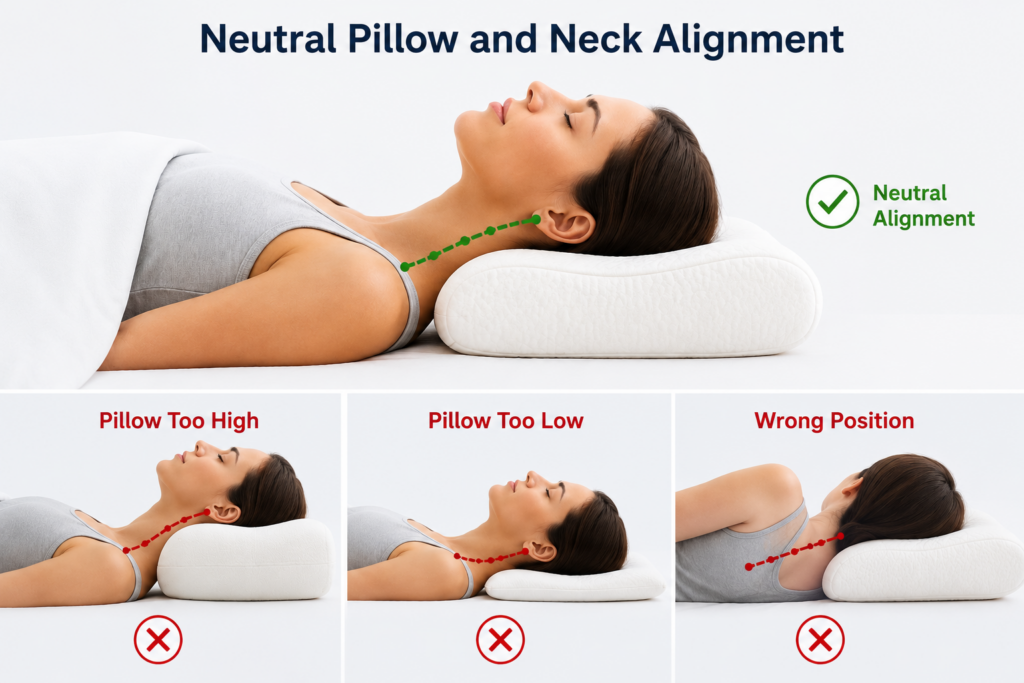
Pillow height, mattress support, sleep position, and existing neck tightness can all influence how much strain is placed on the neck during sleep.
Can the Wrong Pillow Cause Neck Pain?
Yes. The way a pillow supports your head and neck can affect spinal alignment during sleep. A pillow that is too high, too low, or no longer provides enough support may place additional strain on the muscles and joints in the neck. The right pillow depends on factors such as your sleep position and body type, so there is no single pillow that works for everyone.
Replacing a pillow may improve comfort for some people, but recurring or persistent neck pain often has additional contributing factors beyond pillow support.
Why Is Neck Pain Worse in the Morning?
Neck pain can feel worse in the morning because the neck has been still for hours, and irritated tissues may stiffen while you sleep.
During the day, you naturally shift positions. At night, the neck may stay bent, rotated, or unsupported for a long stretch. If a muscle is already tight or a joint is irritated, that position can trigger guarding. Muscle guarding is the body’s natural response to irritation or pain. The muscles tighten to protect the area, making the neck feel locked or difficult to turn.
Morning stiffness often eases as muscles warm up and the neck begins moving again. However, pain that continues to worsen, repeatedly returns, or is accompanied by numbness, tingling, or weakness may indicate that something more than temporary stiffness is contributing to symptoms.
Is It a Muscle Spasm, Stiff Joint, or Pinched Nerve?
The type of symptoms you experience can provide clues about what is causing your neck pain. While the exact cause is not always obvious, the way the pain feels and whether it stays in the neck or spreads into the arm can help guide an evaluation.
A muscle spasm often feels like a tight knot, cramp, or sharp pulling pain on one side of the neck. A stiff joint may feel like your neck catches or will not turn as far as usual. A pinched or irritated nerve is more likely when pain spreads into the shoulder, arm, hand, or fingers, or when numbness, tingling, burning, or weakness develops.
Muscle, joint, and nerve problems are not always separate. For example, muscle tightness may limit movement while nearby inflammation irritates a nerve. Looking at the overall pattern of symptoms usually provides more useful information than focusing on any single symptom alone.
What Is a Muscle Spasm?
A muscle spasm is a sudden, involuntary tightening of a muscle. In the neck, spasms often occur when muscles react to irritation by tightening to protect the area, making movement painful or difficult.
Neck Pain Symptoms and What They May Suggest
| Symptom | Often More Muscular or Joint-Related | May Suggest Nerve Irritation |
| Stiffness in one area | Common after awkward sleep position or muscle guarding. | More concerning if stiffness is severe with fever, headache, or sudden illness. |
| Sharp catch when turning | Can happen with a spasm or irritated neck joint. | Should be checked if it keeps worsening or follows an accident or fall. |
| Pain into shoulder or arm | Can come from tight muscles, but pattern matters. | Radiating pain may suggest nerve irritation from the neck. |
| Numbness or tingling | Less typical for simple sleep stiffness. | Often worth evaluation, especially if it travels into the hand or fingers. |
| Weakness | Pain can make movement feel limited. | True weakness in the arm, hand, or grip should be evaluated promptly. |
Can Sleeping Wrong Cause a Pinched Nerve?
Sleeping in an awkward position can sometimes make an existing nerve problem more noticeable, but it does not always cause a true pinched nerve. If pain, tingling, numbness, or weakness extends into the shoulder, arm, or hand, an evaluation can help determine whether symptoms are more consistent with muscle irritation, joint dysfunction, or nerve involvement.
When Should Neck Pain After Sleeping Be Evaluated?
Neck pain after sleeping should be evaluated when it persists, worsens, extends into the arm or hand, or comes with numbness, tingling, weakness, or trouble using the arm normally.
Evaluation is also important if the pain began after a car accident, workplace incident, fall, or sports injury, even if symptoms seemed mild at first. Pain that appears later can still be related to the original injury, especially when inflammation, guarding, or nerve irritation develops over time.
What Happens During an Evaluation for Neck Pain?
A healthcare provider evaluates more than where the pain is located. They may assess when symptoms began, whether pain stays in the neck or travels into the shoulder or arm, what movements make symptoms worse, and whether the overall pattern suggests muscle, joint, or nerve irritation. Based on the findings, a healthcare provider can better determine whether symptoms are more consistent with muscle, joint, nerve, or another underlying condition.
Key Takeaways
- Most neck pain after sleeping is caused by irritation of muscles, joints, or other soft tissues that remained in one position overnight.
- Symptoms that spread into the shoulder or arm may suggest nerve involvement rather than simple stiffness.
- Morning pain often improves with movement, but recurring or worsening symptoms deserve closer attention.
- Persistent pain, numbness, tingling, or weakness may warrant medical evaluation to identify the underlying cause.
Frequently Asked Questions
How long does neck pain from sleeping wrong usually last?
Many mild cases improve as the neck begins moving again, but there is no guaranteed timeline. Consider an evaluation if pain keeps getting worse, does not improve, or continues to interfere with daily activities.
Why did I wake up with neck pain on one side?
One-sided neck pain after sleeping often happens when the head or neck stays turned, bent, or unsupported for several hours. It can also result from muscle tightness, joint irritation, or a pre-existing neck problem that became more noticeable overnight.
Can sleeping wrong cause a headache?
Yes. Muscle tension and irritation in the neck can sometimes contribute to headaches, particularly near the base of the skull. If headaches become severe, occur suddenly, or are accompanied by neurological symptoms, prompt medical evaluation is important.
Can sleeping wrong cause arm tingling?
Yes. Arm tingling after sleeping can happen when a nerve becomes irritated or compressed. If tingling continues, returns often, spreads into the hand or fingers, or comes with weakness, it should be evaluated.
Is a stiff neck after sleeping the same as whiplash?
No. A stiff neck after sleeping is usually related to position, muscle tightness, or joint irritation. Whiplash most often occurs after a sudden force, such as a car accident.
When is neck pain after sleeping more serious?
Neck pain deserves closer attention if it keeps getting worse, spreads into the shoulder or arm, or comes with numbness, tingling, or weakness. Severe or sudden symptoms should be evaluated immediately.
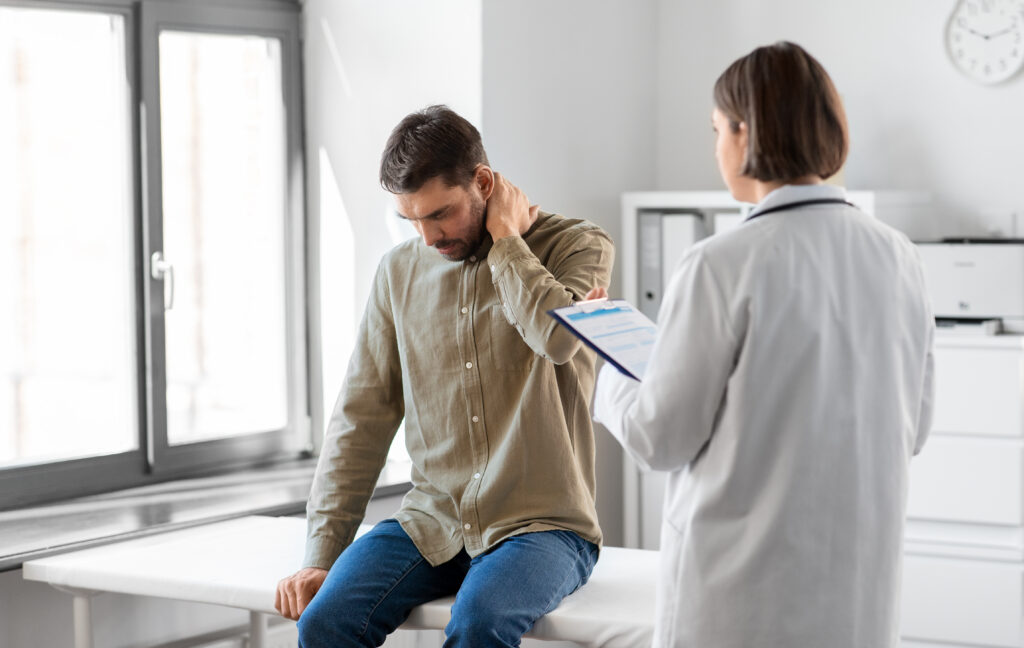
Woke Up With Neck Pain That Is Not Letting Up?
If waking up with neck pain is becoming a pattern—or symptoms are lasting longer, spreading into the arm, or making it harder to work, drive, or sleep—understanding what may be contributing to your symptoms—whether muscles, joints, nerves, or a previous injury—may help guide the next step.
PainandInjury.com helps connect patients throughout New York, New Jersey, and Connecticut with specialists who evaluate neck, back, nerve, muscle, accident-related, and work-related injuries.
For help finding the right specialist in the Pain and Injury network, call 800-949-6100 or request an appointment through PainandInjury.com.
*This article is for educational purposes only and is not a diagnosis or treatment plan. Every injury and medical condition is different. A qualified healthcare professional can evaluate your symptoms in the context of your medical history and individual needs.