
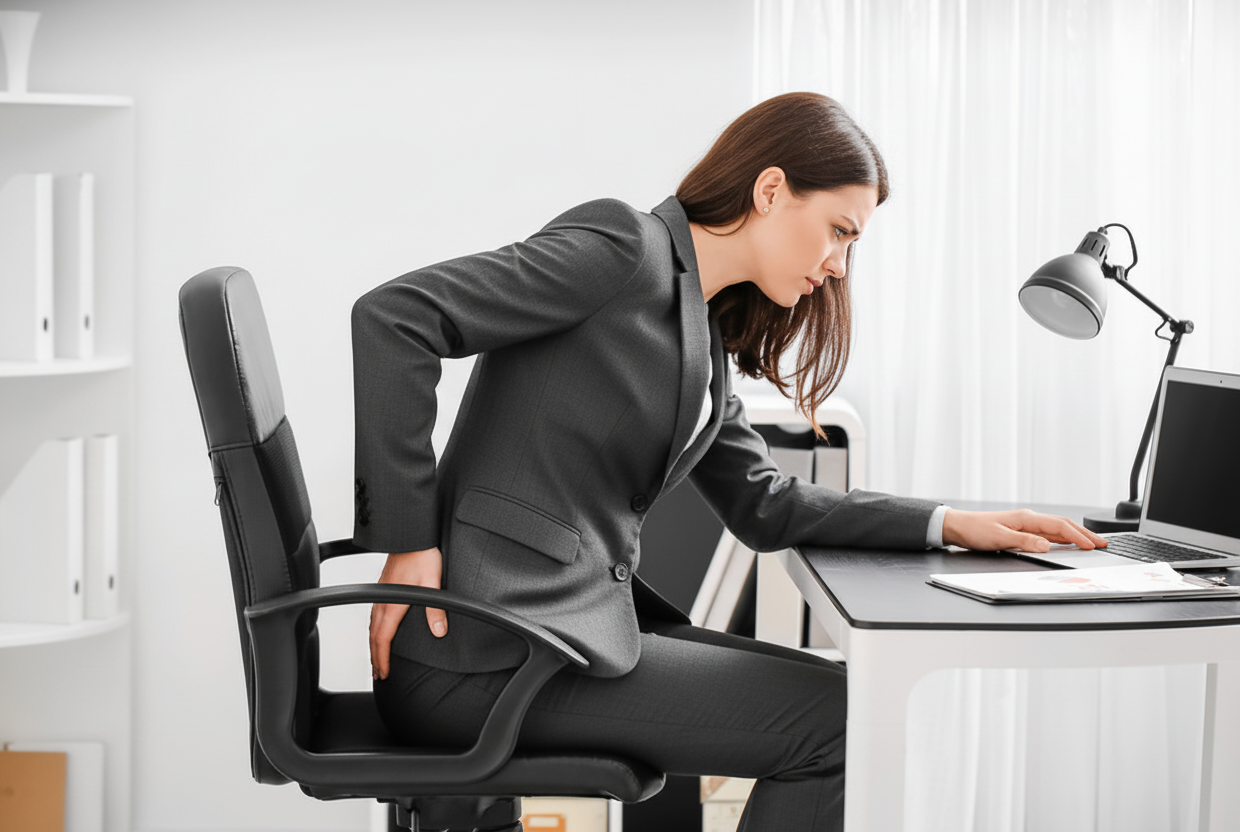
Dead Butt Syndrome: Why Sitting All Day May Be Weakening Your Glutes
Dead butt syndrome, medically referred to as gluteal amnesia, occurs when prolonged sitting reduces normal activation of the glute muscles. Over time, this muscle inhibition may contribute to hip pain, lower back strain, sciatica-like symptoms, pelvic instability, and movement dysfunction.
Desk workers, drivers, and commuters are particularly vulnerable because prolonged sitting places the hips in a constant flexed position while the glute muscles remain inactive for long periods. For this reason, many desk workers experiencing desk job hip flexor pain or sitting lower back pain may not realize weak glute activation could be contributing to symptoms.
Quick Summary
- Prolonged sitting may reduce normal glute muscle activation
- Weak glutes can contribute to hip and lower back pain
- Desk workers often develop postural compensation patterns
- Sciatica-like symptoms may occur alongside pelvic instability
What Is Dead Butt Syndrome?
Dead butt syndrome is a neuromuscular condition involving lower activation of the glute muscles, particularly the gluteus maximus and gluteus medius.
The condition is commonly linked to long hours sitting and reduced movement.
When the glute muscles stop functioning efficiently, other structures may compensate for pelvic stability and movement control. Over time, this compensation may increase stress on the lower back, hips, hamstrings, and knees.
Healthcare providers sometimes associate dead butt syndrome with postural conditions such as anterior pelvic tilt sitting patterns and lower cross syndrome.
Why Dead Butt Syndrome Is Becoming More Common
Modern work habits have dramatically increased the amount of time people spend sitting each day. As a result, many office workers, remote employees, drivers, and commuters remain seated for hours with limited movement throughout the day.
Extended screen time, long commutes, work-from-home environments, and poor workstation ergonomics may contribute to muscle inactivity, poor posture, and repetitive workplace strain. Over time, these habits may increase the risk of hip tightness, glute weakness, sitting posture strength loss, and lower back discomfort.
Many people assume stiffness and soreness are normal side effects of desk work. However, ongoing symptoms may sometimes indicate movement dysfunction linked to extended periods of sitting and reduced glute activation.
Why Sitting Turns Off Your Glutes
The human body is designed for movement. Prolonged sitting keeps the hips in a flexed position for extended periods, which may reduce proper glute engagement.
Over time, the hip flexors may become tight while the glute muscles become less active. This imbalance can affect pelvic alignment and change how the body distributes force during movement.
When the glutes stop activating normally, surrounding structures such as the lower back, hips, hamstrings, and knees may absorb additional stress. Some people may begin experiencing hip tightness, lower back discomfort, pelvic instability, or sciatica-like symptoms as compensation patterns develop.
Sitting for long periods and anterior pelvic tilt may weaken the gluteus medius over time
Without regular movement and proper muscle activation, extended periods of sitting contribute to chronic musculoskeletal strain over time. Many people experiencing sitting posture strength loss first notice symptoms when standing up after long periods at a desk.
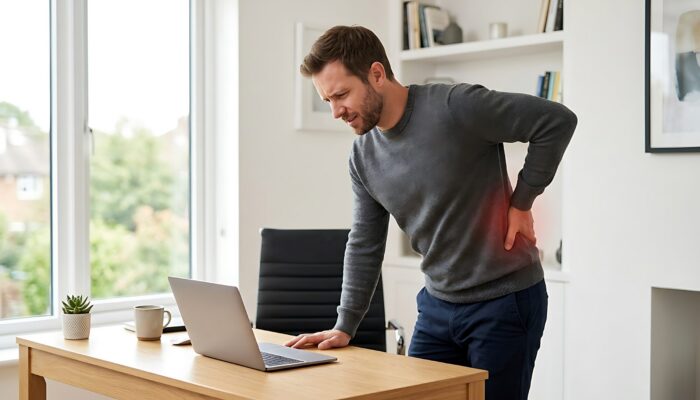
Five Signs You May Have Dead Butt Syndrome
1. Lower Back Pain During Everyday Tasks
Weak glute muscles may shift additional stress into the lumbar spine during standing, walking, lifting, or climbing stairs.
2. Tight Hamstrings That Never Seem to Loosen
When the glutes become underactive, the hamstrings may compensate to help stabilize movement patterns.
3. Hip Muscle Pain After Sitting
Feeling pain or stiffness when you stand up after sitting for a long time can be a sign that your muscles are unbalanced or your glutes are weak.
4. Sciatica-Like Symptoms
Some individuals experience tingling, burning pain, or numbness into the leg when surrounding muscles and tissues begin compensating for pelvic instability.
5. Difficulty Activating the Glutes During Exercise
Some people notice that squats, bridges, or lunges primarily activate the lower back or hamstrings instead of the glutes.
The Desk Worker’s Glute Activation Protocol (5 Minutes)
Movement breaks throughout the workday can help reduce prolonged muscle inactivity and improve hip mobility. Regular physical activity may also support overall musculoskeletal health and reduce sedentary strain. A simple desk worker workout routine focused on posture and glute activation may further help counteract prolonged sitting patterns.
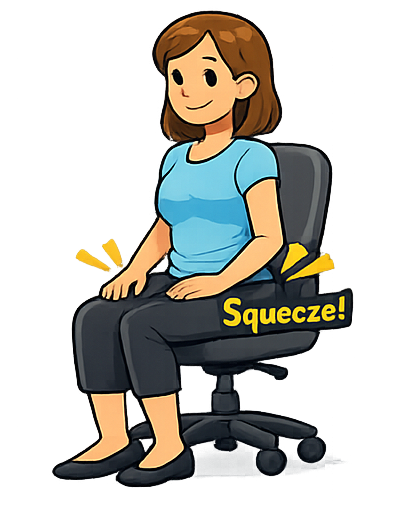
Seated Isometrics
Description: While seated upright, gently contract the glute muscles for several seconds before relaxing. Repeating this movement periodically throughout the day may help improve body awareness and muscle engagement.
Rationale: These simple movements may help support glute activation during the workday for many desk workers and may encourage improved muscle engagement after prolonged sitting.
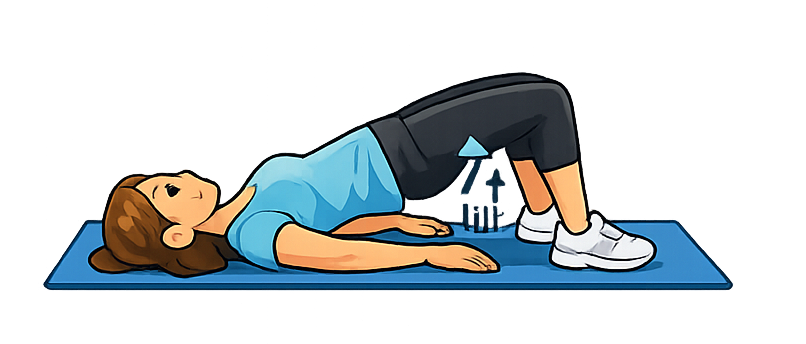
Glute Bridges
Description: Lie on your back with your knees bent and feet flat on the floor. Slowly lift your hips upward while keeping your shoulders on the ground, then lower back down with control.
Rationale: Glute bridges can help activate the posterior chain and improve pelvic stability. Additionally, some individuals find this exercise useful for counteracting prolonged hip flexion associated with sitting for extended periods.
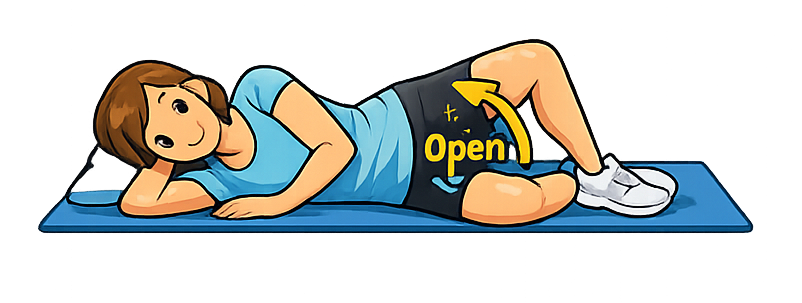
Clamshells
Description: Lie on your side with your knees bent and feet together. Keeping your feet touching, slowly raise your top knee before returning to the starting position.
Rationale: Clamshell exercises target the gluteus medius, which plays an important role in hip stabilization and lower body mechanics. In addition, this exercise may help support hip strength and movement control.
When Sitting Pain May Be More Than Muscle Tightness
Mild stiffness after sitting may improve with movement. However, persistent symptoms may indicate a more significant musculoskeletal condition.
Medical evaluation may be appropriate if symptoms:
- interfere with walking or exercise
- persist despite stretching
- radiate into the leg
- worsen during prolonged sitting
- follow a workplace or motor vehicle injury
A comprehensive evaluation may help identify whether symptoms involve muscular dysfunction, spinal involvement, nerve irritation, or joint pathology.
Frequently Asked Questions
Why does it feel like my butt is falling asleep at work?
Feeling like your butt is “falling asleep” at work is usually caused by pressure on nerves or reduced blood flow from sitting too long. If you’re sitting on a hard chair, leaning unevenly, or crossing your legs, it can create numbness, tingling, or that pins-and-needles feeling in the glutes or upper legs.
What is dead butt syndrome?
Dead butt syndrome is a condition involving reduced activation of the glute muscles, particularly associated with prolonged sitting and sedentary behavior.
Can sitting too much weaken your glutes?
Sitting too much may reduce normal glute activation over time, particularly when movement and postural variation are limited.
Why does my butt hurt after sitting all day?
Pain after sitting all day may involve muscular tightness, glute inhibition, nerve irritation, or postural compensation patterns.
Can dead butt syndrome cause lower back pain?
Weak or underactive glute muscles may shift mechanical stress into the lower back and surrounding structures, potentially contributing to pain and stiffness.
Can sitting all day cause sciatica?
Sitting all day and muscular imbalance may contribute to sciatica-like symptoms in some individuals, particularly when surrounding tissues place stress on nearby nerves.
Sitting All Day Shouldn’t Mean Living With Chronic Pain
Hip tightness, glute weakness, pelvic instability, and lower back discomfort may all be connected to prolonged sitting and reduced muscle activation. Many people believe that sitting discomfort is normal until symptoms begin affecting movement, exercise, or daily activities.
Desk workers, commuters, and injured workers experiencing persistent hip or back pain may benefit from a comprehensive musculoskeletal evaluation through the Pain and Injury network. >PainandInjury.com helps connect patients with specialists offering evaluations, physical therapy, and pain management options throughout New York, New Jersey, and Connecticut</span>, including support for workers’ compensation and no-fault injuries.
To learn more, call 800-949-6100 or request an appointment.