

Motorcycle Accident Injuries: What to Know After a Crash

Motorcycle accidents can lead to serious injuries, even at lower speeds. Without the protection of a vehicle frame, riders are more exposed to impact, road surfaces, and other vehicles. Understanding where these accidents commonly occur, what steps to take afterward, and how medical care may be covered can help injured riders feel more informed during a stressful time.
This guide explains common motorcycle accident concerns, including injury care options, insurance coverage, and next steps after a crash.
Where Motorcycle Accidents Commonly Happen
Motorcycle accidents often occur in high-traffic areas where visibility and reaction time are limited. Studies show that many crashes happen at:
- Intersections and busy city streets
- Roads where vehicles make left turns across traffic
- Areas with sudden lane changes or merging traffic
- Urban neighborhoods with frequent stop-and-go driving
Compared to cars, motorcycles are smaller and easier for drivers to overlook, especially in dense traffic. This can increase injury risk for riders during everyday commutes.
Common Motorcycle Accident Injuries
Motorcycle accident injuries can range from mild to severe, depending on the type of collision and protective gear worn. Common injuries may include:
- Neck, back, and spine injuries
- Shoulder, knee, and joint injuries
- Road rash and soft tissue damage
- Nerve pain or numbness
- Head injuries, even with a helmet
Some symptoms may not appear immediately. Pain, stiffness, or reduced mobility can develop hours or days after the crash, which is why some individuals choose to seek medical evaluation after this accident.
What to Do After a Motorcycle Accident
Understanding common post-accident considerations may help riders feel more informed and better prepared during a stressful situation. These actions are commonly taken after a crash, regardless of perceived severity.
After a motorcycle accident, common steps include:
- Moving to a safe area if possible
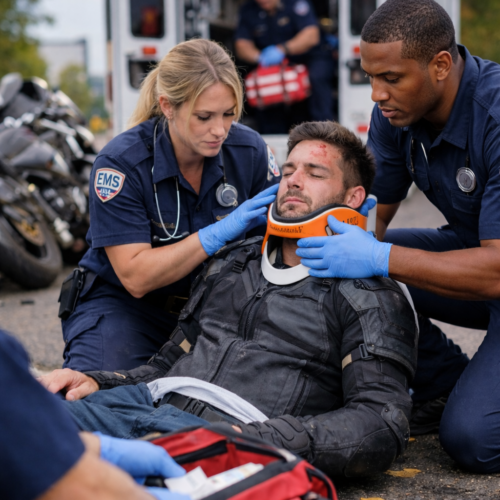
- Calling emergency services
- Seeking medical evaluation, even if injuries seem minor
- Collecting contact and insurance information
Some people may ask what to do after a minor motorcycle accident and assume medical care is not necessary. However, even low-speed crashes can lead to symptoms such as muscle strain, joint pain, or stiffness that may not appear right away. A medical evaluation may help clarify injuries and assess symptoms before they interfere with daily activities.
Medical Care After a Motorcycle Accident
Injury care for this type of accident often focuses on managing pain, restoring function, and monitoring recovery. Treatment plans may involve:
- Physical therapy for mobility and strength
- Pain management and rehabilitation medicine (PM&R)
- Imaging or diagnostic testing when needed
- Ongoing evaluations to track symptoms
Care is typically individualized based on the type of injury and how symptoms affect daily activities.
Insurance Coverage for Motorcycle Accident Injuries
After a motorcycle accident, many injured riders in New York and New Jersey wonder whether health insurance covers motorcycle accident injuries and how medical care is typically paid for. Health insurance may cover treatment related to motorcycle accident injuries, depending on the specific policy and coverage terms. Coverage can include physician visits, imaging, physical therapy, and rehabilitation services used to address accident-related pain or mobility concerns.
In New York and New Jersey, no-fault insurance laws generally do not apply to motorcycle accidents in the same way they do for car accidents. As a result, motorcycle riders often cannot rely on personal injury protection (PIP) to cover medical expenses after a crash. Because coverage rules can vary by policy and situation, understanding how your coverage applies may help reduce delays in treatment after an injury.
Filing an Insurance Claim After a Motorcycle Accident Injury
Motorcycle accidents often raise questions about insurance coverage, especially when another driver is involved. Many injured riders search for information about how to file a claim after motorcycle accident injury and what documentation may be required.
In New York, motorcycles are not covered under the state’s no-fault insurance system for bodily injuries. While motorcycle policies may include certain optional protections, coverage is typically focused on liability and property damage rather than injuries sustained by the motorcycle driver. As a result, coverage options after a motorcycle accident may depend on the details of the crash and the type of insurance involved.
Medical documentation plays an important role in the claims process. Records from evaluations, treatment visits, and reported symptoms are commonly submitted along with accident reports and insurance information. Because every accident and insurance policy is different, timelines and required documentation can vary.
Moving Forward After a Motorcycle Accident: Request an Appointment
Recovering from a motorcycle accident injury often involves medical care, follow-up appointments, and time. While every recovery experience is different, some individuals seek early evaluation to better understand their condition and discuss potential care options.
If you were injured in a motorcycle accident, our team can help you review your insurance information to determine what coverage may be available. We can assist in verifying benefits and clarifying what options you may be eligible to use for treatment.
If you have legal representation, a medical lien may also be an option. When an attorney or legal advocate is able to sign a lien for care, we can discuss treatment options available within our covered provider network.
PainandInjury.com connects patients with a network of board-certified providers experienced in treating motorcycle accident injuries. A medical evaluation can help document symptoms and explain available treatment options after a crash.