

Is Wrist Pain From Typing a Sign of Carpal Tunnel Syndrome?

If your hands tingle or go numb while typing, it may not always be fatigue. These early symptoms can be associated with carpal tunnel syndrome and may become more noticeable over time.
It usually starts during a normal workday. Typing emails, answering messages, or working through tasks at a computer. Then comes a slight tingling in the fingers. It may come and go at first, making it easy to ignore.
Over time, that feeling could turn into numbness in fingers or mild wrist discomfort. For some, working from home wrist pain becomes part of the daily routine.
At that point, a common question comes up: why does my wrist hurt when I type—and could it be carpal tunnel syndrome?
Common Carpal Tunnel Symptoms
Carpal tunnel syndrome occurs when the median nerve in the wrist becomes compressed. This can lead to noticeable changes in how the hand and fingers feel.
Common carpal tunnel symptoms:
- Numbness in fingers, especially in the thumb and first few fingers
- Tingling in fingers during or after activity
- Hand numbness that may worsen over time
- Weakness or difficulty holding objects
These symptoms may be more noticeable during repetitive activities like typing.
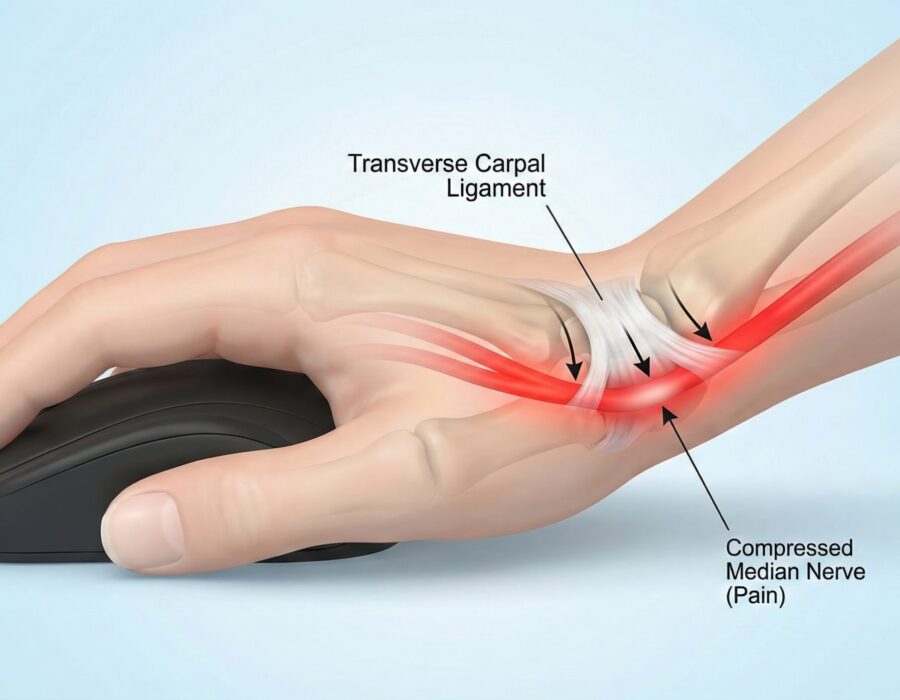
Why Typing Can Lead to Wrist Pain
Repetitive movements can place ongoing stress on the wrist. Over time, this may contribute to irritation or pressure within the carpal tunnel.
Wrist pain from typing may develop gradually, especially for individuals spending long hours at a computer. While not all discomfort is caused by carpal tunnel syndrome, repetitive strain can increase symptoms like tingling in fingers or hand numbness.
This is often why pain or computer-related discomfort becomes more noticeable over time.
Early Signs of Carpal Tunnel Syndrome
The early signs of carpal tunnel syndrome are not always severe. They may begin subtly and appear only during certain activities.
Some early patterns include:
- Tingling sensations that come and go
- Numbness during typing or at night
- Mild discomfort that improves with rest
- Occasional hand weakness
Recognizing these early signs may help individuals better understand changes in their symptoms.
What Happens If Carpal Tunnel Symptoms Are Ignored?
In some cases, symptoms become more persistent over time. What starts as occasional discomfort can gradually occur more frequently, especially during everyday activities.
As symptoms progress, some individuals begin to notice increased hand numbness, reduced grip strength, or more consistent wrist discomfort. Tasks that once felt simple—such as holding a phone or buttoning clothing—may begin to feel more challenging.
In some cases, symptoms can begin to occur even at rest, not just during repetitive movements. This can make them more noticeable and harder to manage with simple adjustments.
While not all cases progress in the same way, paying attention to early signs of carpal tunnel syndrome may help individuals better understand changes in their symptoms and consider whether further evaluation is appropriate. Recognizing when symptoms begin to change may help guide the next steps.

How to Tell If You May Have Carpal Tunnel
Many people wonder how to tell if you have carpal tunnel, especially when symptoms seem mild at first.
Pay attention to how often symptoms occur and whether they are becoming more frequent or interfering with daily activities. Persistent numbness in fingers, tingling in fingers, or ongoing wrist discomfort may suggest the need for further evaluation.
How Carpal Tunnel Syndrome Is Evaluated
Evaluation for carpal tunnel syndrome typically begins with a discussion of symptoms and a physical assessment. This may include checking hand strength, sensation, and how certain wrist movements affect symptoms.
In some cases, an EMG test for carpal tunnel may be recommended. This test helps assess nerve function and can provide more information about whether compression is present.
Additional evaluation methods can be considered depending on individual symptoms and how they have progressed over time.
Carpal Tunnel Treatment Without Surgery
Many individuals explore carpal tunnel treatment without surgery, particularly in earlier stages. Adjusting workstation ergonomics, such as keyboard position and wrist alignment, may also help reduce strain during daily activities.
Non-surgical carpal tunnel treatment often includes:
- Adjusting daily activities to reduce strain
- Using wrist support during certain tasks
- Guided exercises or therapy approaches such as physical therapy
- Other non-invasive options recommended by a provider, and in some cases, additional pain management options
These approaches can help manage symptoms and support function over time, especially when addressed early.
Frequently Asked Questions
Repetitive activities like typing can place ongoing stress on the wrist. Over time, this type of strain can be associated with symptoms of carpal tunnel syndrome in some individuals.
Early signs often include tingling in fingers, numbness in fingers, and mild hand discomfort during activity. These symptoms may appear gradually and can be easy to overlook at first.
Non-surgical approaches are often considered depending on symptoms and individual needs. These may focus on reducing strain and supporting function over time.
If symptoms become more frequent, begin to interfere with daily activities, or do not improve over time, it may be appropriate to seek a professional evaluation.
Understanding Your Symptoms: When to Take the Next Step
Experiencing wrist pain from typing, numbness in fingers, or tingling in fingers can raise questions about what may be causing these symptoms. While each situation is different, some individuals choose to seek evaluation to better understand their condition and explore available care options.
If wrist pain, numbness, or tingling continues or starts interfering with daily activities, it may be time to consider a medical evaluation to better understand the cause.
PainandInjury.com connects patients with a network of board-certified providers experienced in evaluating conditions such as carpal tunnel syndrome. A medical evaluation may help document symptoms and provide information about potential next steps based on individual needs.
To learn more, contact Pain and Injury at 800-949-6100 or request an appointment.